


Table of Contents
- How Much Caffeine White Tea Contains
- White Tea Caffeine Per Cup
- White Tea Caffeine Per Cup: Factors That Change the Amount
- White Tea vs Green Tea Caffeine
- Factors Affecting Caffeine in Tea
- Brewing Time and Water Temperature
- How to Brew White Tea
- White Tea vs Coffee Caffeine
- Estimating Caffeine in Your Cup
- Conclusion
- Frequently Asked Questions
Last Updated: October 14, 2026
How Much Caffeine White Tea Contains
White tea contains less caffeine than most other true teas, typically 15-30 milligrams per cup, though this varies (pubmed.ncbi.nlm.nih.gov).
White tea comes from the Camellia sinensis plant, the same plant that produces green, black, and oolong tea (pubmed.ncbi.nlm.nih.gov). It is the least processed of all true teas, which is why it retains its delicate flavor and pale color, and why it has lower caffeine levels than more heavily processed teas.
White Tea Caffeine Per Cup
A standard 8-ounce (240 ml) cup of white tea brewed for 3-5 minutes typically lands between 15 and 30 milligrams of caffeine. The same tea can be quoted at 6 mg in one place and 55 mg in another, so the numbers only make sense once you separate the white tea style, the serving size, and whether the figure describes dry leaf or a brewed cup.
Caffeine by white tea style (8 oz / 240 ml cup)
The table below consolidates ranges commonly reported by tea retailers, tea-science writers, and lab-style analyses. Treat these as typical bands, not guarantees.
| White tea style | What's in it | Typical caffeine per 8 oz cup |
|---|---|---|
| Silver Needle (Bai Hao Yinzhen) | Unopened buds only | ~15-20 mg |
| White Peony (Bai Mudan) | One bud plus two young leaves | ~20-30 mg |
| Shou Mei / Gong Mei | Older leaves, later harvest | ~25-35 mg |
| Blended white tea (e.g., with mint, fruit) | White tea plus botanicals | ~10-25 mg (depends on white tea ratio) |
| Decaffeinated white tea | White tea after CO2 or solvent decaffeination | ~2-5 mg |
Two patterns matter: the more mature the leaf material, the higher the caffeine (Shou Mei often reads higher than Silver Needle), and blends can go either direction, mint or fruit dilutes caffeine per cup, while added green tea or matcha pushes it up.

Why published numbers disagree
When you see a 6 mg figure next to a 55 mg figure for 'white tea,' the gap usually comes down to:
- Dry leaf vs. brewed cup. Dry leaf caffeine (often 3-5% by weight) isn't the same as what dissolves into your cup. A 2-gram serving at 4% contains ~80 mg in the leaf, but only a fraction extracts into an 8-ounce steep.
- Serving size. A 6-ounce Japanese-style cup and a 12-ounce mug are not the same drink. Many low figures assume a smaller cup.
- Brewing strength. A lightly brewed Silver Needle at 1 gram per cup extracts far less caffeine than a heaping tablespoon of White Peony steeped 5 minutes.
A quick sanity check
If a source claims white tea has 'almost no caffeine' or 'as much as black tea,' both are probably wrong. Black tea commonly lands around 40-70 mg per 8-ounce cup, green tea around 25-50 mg, and white tea sits below both.
For context: a standard 8-ounce cup of coffee contains roughly 95-200 mg of caffeine, so even a strong white tea is typically a fraction of a coffee's dose.
White Tea Caffeine Per Cup: Factors That Change the Amount
Several variables influence how much caffeine ends up in your cup:
- Tea leaf grade: Whole leaves contain less caffeine than broken pieces or dust
- Brewing temperature: Hotter water extracts more caffeine faster
- Steeping duration: Longer steeping pulls more caffeine from the leaves
White Tea vs Green Tea Caffeine
White tea and green tea are often confused because both come from the same plant and undergo minimal processing, but white tea typically contains less caffeine.
Green tea averages 25-50 milligrams per 8-ounce cup, while white tea averages 15-30 milligrams.
Both are gentler than black tea (40-70 mg per cup) or oolong (30-50 mg).
Factors Affecting Caffeine in Tea
Understanding what changes caffeine levels helps you control your intake. The factors fall into two categories: what happens before you buy the tea, and what you do when you brew it.
Tea Variety and Cultivar
Different white tea varieties have different natural caffeine levels.
Cultivar also matters: some Camellia sinensis varieties naturally contain more caffeine, and Assamica cultivars tend to run higher than others.
When shopping, the variety on the package is your clue: Silver Needle is gentler than white peony, which is gentler than blends that include other leaves.
Leaf Age and Harvest Timing
Leaf age at harvest significantly impacts caffeine content: younger leaves and unopened buds contain less caffeine than mature leaves.
That's why Silver Needle, made exclusively from buds, has such low caffeine, the buds are harvested before they fully develop and haven't accumulated as much caffeine as later-season leaves.
Harvest timing matters too: spring leaves have different caffeine profiles than summer or autumn harvests, since the plant's growth stage shapes leaf chemistry.
Brewing Time and Water Temperature
How you brew is the single biggest factor you control, and temperature and time work together to determine final caffeine content.
Water at 160-180°F (70-80°C) is ideal for white tea: it extracts delicate flavor without excessive caffeine. Boiling water (212°F) extracts significantly more, so avoid it. A 3-minute steep is standard; longer pulls more caffeine.
How to Brew White Tea
Brewing white tea properly brings out its delicate flavor while controlling caffeine content:
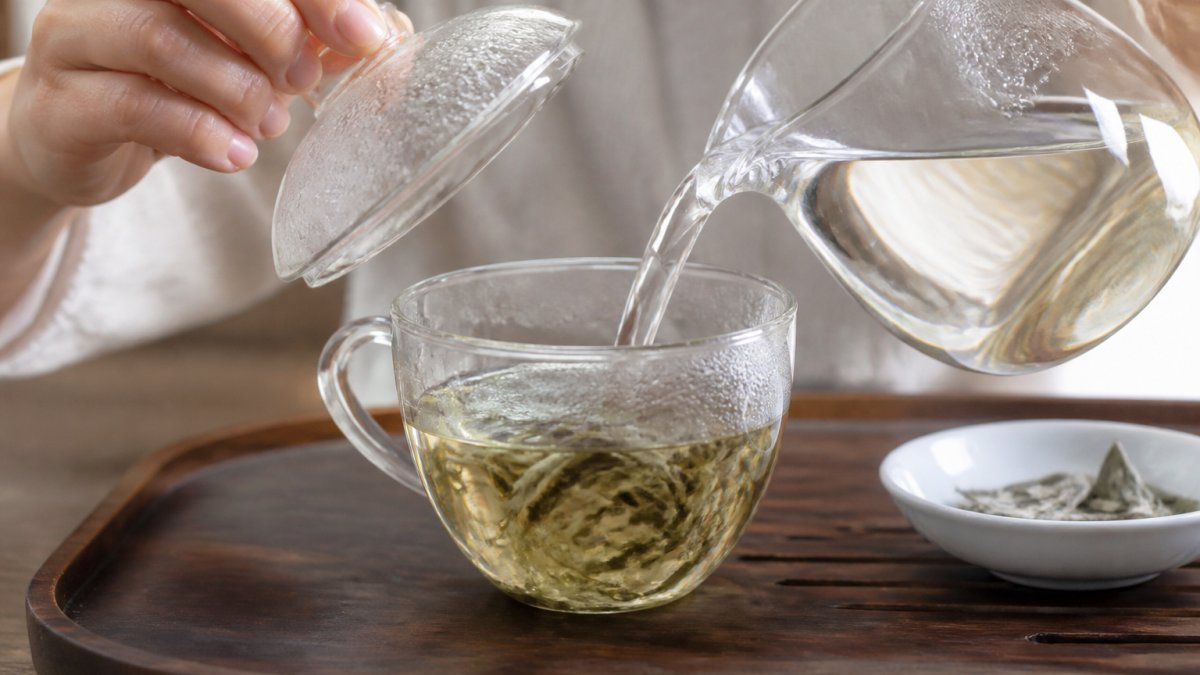
Start with fresh, filtered water heated to 160-180°F, or let boiling water cool 3-5 minutes.
Pour the water over the leaves and steep 3-5 minutes; stick to 3 minutes for less caffeine. Strain and enjoy.
You can re-steep the same leaves: the second infusion needs 1-2 minutes, the third 2-3 minutes, and each successive steep contains progressively less caffeine.
At Gone to the Dogs, our premium white tea selections are chosen specifically for their ability to deliver exceptional flavor with minimal caffeine. Whether you're brewing our Moroccan Mint blend or exploring other varieties, proper technique ensures you get the experience you're looking for.

White Tea vs Coffee Caffeine
The caffeine difference between white tea and coffee is dramatic: a standard 8-ounce cup of coffee contains 95-200 milligrams, while white tea contains 15-30 milligrams, roughly 3-7 times more in coffee.
That makes white tea an excellent alternative if you love hot beverages but want less caffeine.
Swapping even one cup of coffee for white tea saves 65-170 milligrams of caffeine per day, which over time can noticeably affect sleep quality and anxiety levels.
Estimating Caffeine in Your Cup
Most guides say brewing affects caffeine, then leave you to guess. Here's a repeatable at-home method using a kitchen scale and timer, no lab required. It won't be milligram-perfect, but it gets you close enough to make real decisions about your intake.
Step 1: Weigh your dry leaf
Caffeine scales with the amount of tea, not spoon volume. A level teaspoon of Silver Needle (fluffy buds) can weigh as little as 1 gram, while a level teaspoon of White Peony can weigh 2-3 grams, a 2-3x difference in caffeine potential from the same 'one teaspoon.'
Use a small kitchen scale and record grams. As a reference point:
- Light cup: ~1 g per 8 oz
- Standard cup: ~2 g per 8 oz
- Strong cup: ~3 g per 8 oz
Step 2: Apply a style-based caffeine factor
Different white tea styles carry different caffeine concentrations in the dry leaf. A practical working range is 3-5% caffeine by dry weight, with buds on the lower end and mature leaves on the higher end. For estimation:
- Silver Needle: use ~3%
- White Peony: use ~4%
- Shou Mei / Gong Mei: use ~4.5%
Multiply grams of leaf by the percentage to get caffeine in the leaf. Example: 2 g of White Peony at 4% = ~80 mg.
Step 3: Estimate extraction
Not all of that caffeine ends up in your cup. Extraction depends mainly on temperature and time:
- Cool brew (160°F / 71°C, 3 min): roughly 50-60% extracted
- Standard brew (175°F / 79°C, 3-4 min): roughly 65-75% extracted
- Hot brew (195-205°F / 90-96°C, 5+ min): roughly 80-90% extracted
Using the example above: 80 mg in the leaf × 70% extraction ≈ 56 mg in the cup, higher than the '15-30 mg' headline number, exactly the discrepancy this method surfaces.
Step 4: Adjust for cup size
All of the above assumes an 8-ounce cup. For a 12-ounce mug, multiply by 1.5; for a 6-ounce cup, multiply by 0.75.
Step 5: Account for re-steeps
White tea is often steeped more than once, and caffeine doesn't extract evenly across infusions. A common pattern reported by tea researchers and home testers:
- 1st steep: ~55-65% of total extractable caffeine
- 2nd steep: ~20-25%
- 3rd steep: ~10-15%
So if your first cup contains ~50 mg, your second steep likely contains ~15-20 mg and your third ~8-12 mg. That's why a 'pot of white tea' can deliver more total caffeine than a single cup suggests, even though each cup is low.
A worked example
Say you brew 3 g of White Peony at 180°F for 4 minutes in a 10-ounce mug, then re-steep twice.
- Leaf caffeine: 3 g × 4% = ~120 mg
- First steep: 120 × 70% = ~84 mg, scaled to 10 oz (×1.25) ≈ 105 mg
- Second steep: ~20% of remaining ≈ 7 mg
That total is closer to a cup of coffee than to the '15-30 mg' figure most articles quote, a useful reality check for anyone who assumes white tea is always low-caffeine.
What this method can't do
It can't tell you the exact caffeine in a specific bag or tin, because caffeine varies by cultivar, terroir, harvest date, and processing. It also can't account for 'white tea' blended with green or oolong. If precision matters, for pregnancy, medication interactions, or a diagnosed sensitivity, treat these estimates as a starting point and confirm with your healthcare provider.
Conclusion
White tea contains less caffeine than any other true tea, making it an excellent choice for anyone seeking a gentler beverage.
The caffeine in your cup depends on the tea variety, its freshness, and most importantly how you brew it. Temperature and steeping time are variables you control, so you can adjust your intake to match your needs.
If you're ready to explore premium white teas that deliver exceptional flavor alongside gentle caffeine levels, Gone to the Dogs offers carefully curated selections designed to elevate your daily rituals. Our Moroccan Mint blend combines white tea's delicate nature with refreshing mint for a smooth, flavorful experience.
Frequently Asked Questions
How much caffeine is in a cup of white tea?
A typical cup of white tea contains between 15-30 milligrams of caffeine per serving, though this varies based on brewing time, water temperature, and the specific white tea variety. Lighter steeps yield less caffeine, while longer brewing times extract more. This makes white tea a gentler choice compared to black or green tea, which contain 25-50 and 20-45 milligrams respectively.
Does white tea have more caffeine than green tea?
No, white tea typically contains less caffeine than green tea. White tea ranges from 15-30 milligrams per cup, while green tea usually contains 20-45 milligrams. The difference stems from processing methods and leaf age. White tea uses young leaves and buds with minimal oxidation, resulting in lower caffeine extraction. Green tea undergoes more processing, which can increase caffeine availability in the brewed cup.
What factors affect the caffeine content of white tea?
Caffeine levels in white tea depend on several factors: the specific cultivar and tea variety, leaf age (buds contain more caffeine than mature leaves), harvest timing, brewing time, water temperature, and serving size. Silver Needle white tea, made from buds alone, typically has different caffeine levels than White Peony, which includes young leaves. Steeping for longer periods and using hotter water both increase caffeine extraction.
Is white tea a good choice if I am sensitive to caffeine?
Yes, white tea is often a good option for caffeine-sensitive individuals. With only 15-30 milligrams per cup, it contains significantly less caffeine than coffee (95-200 milligrams) or black tea (25-50 milligrams). You can further reduce caffeine by using cooler water (160-170°F) and shorter steeping times (2-3 minutes). If you're very sensitive, brewing a lighter cup or choosing decaffeinated tea alternatives may be worth exploring.


