


Quick Summary
To brew tea without bitterness, use water below a rolling boil, steep for the shorter end of the recommended time, and remove the leaves promptly. Use about 1 teaspoon of loose leaf per 8 ounces of water, and match the temperature to the tea type, with green and white teas cooler than black.
- Bitter tea is usually caused by water that is too hot, leaves steeped too long, or too many leaves.
- Green tea is typically brewed at 160-175°F (70-80°C) for 2-3 minutes.
- Black tea handles 200-212°F (93-100°C) for 3-4 minutes.
- Strain or remove the infuser as soon as steeping ends, since leftover leaves keep releasing bitterness.
- Change only one variable per brew, such as temperature, time or leaf amount, to find the cause.
Table of Contents
- What Causes Bitterness in Tea
- Step-by-Step Method to Brew Tea Without Bitterness
- Tea Brewing Temperature by Tea Type
- Tea Steeping Time and When to Cut It Short
- How to Make Black Tea Less Bitter
- How to Fix Bitter Green Tea
- Troubleshooting Bitter Tea One Variable at a Time
- Start Your Next Cup With Jasmine or Moroccan Mint
- Frequently Asked Questions
What Causes Bitterness in Tea
Bitter tea is usually a brewing problem, not a tea problem. Most bitter cups come from water that is too hot, leaves steeped too long, or too many leaves in the pot. The good news is that each of these is easy to fix once you know what to look for.
The bitterness you taste comes mainly from compounds in the leaf that release as the tea steeps. Heat and time pull them out quickly, and steeping too long can make the cup turn harsh.
Bitterness, Astringency and Over-Extraction Explained
People often use "bitter," "astringent," and "over-extracted" to mean the same thing. They are related but not identical.
- Bitterness is a sharp taste felt on the back of the tongue. It is the most common complaint with green tea.
- Astringency is a dry, puckering feeling in the mouth, like the sensation after biting into an unripe fruit.
- Over-extraction is the cause. It happens when too much flavor compound leaves the leaf, and it produces both bitterness and astringency.
Knowing which one you are tasting helps you fix it. If the cup is sharp and sour-edged, lower the heat. If it feels dry and grippy, shorten the steep.
Step-by-Step Method to Brew Tea Without Bitterness
Follow these steps to brew tea without bitterness with almost any loose-leaf tea. We recommend starting with the method below, then adjusting one step at a time.
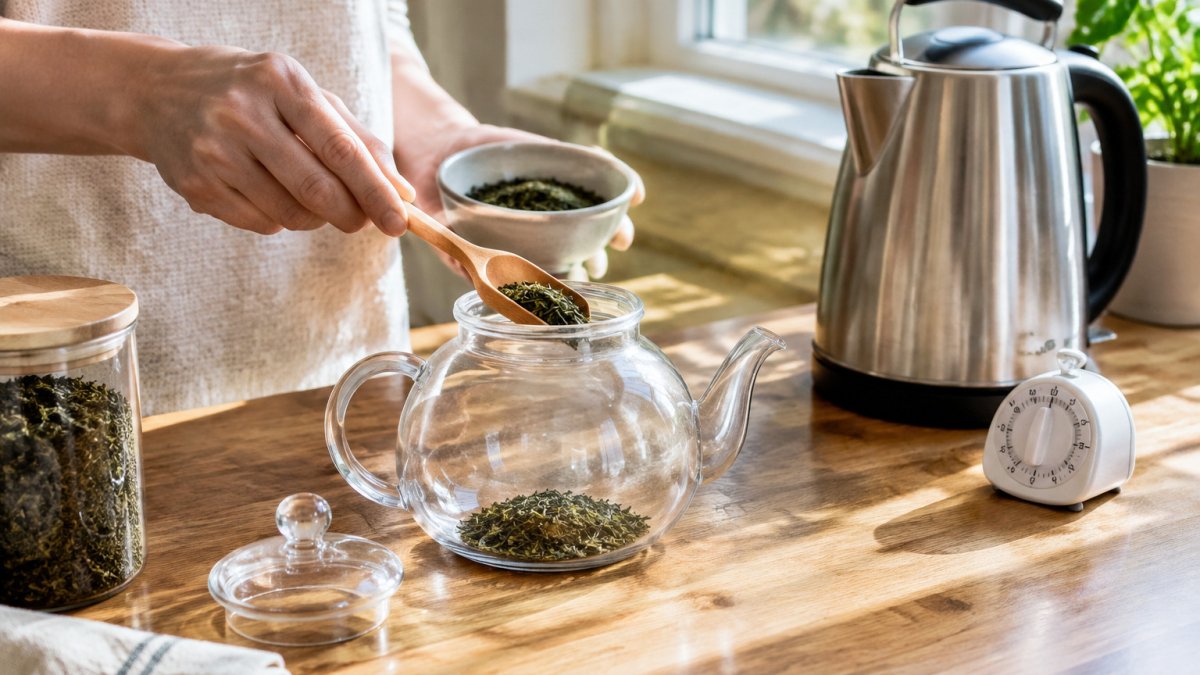
- Measure your leaves. Use about 1 teaspoon (roughly 2 grams) of loose leaf per 8 ounces of water.
- Heat the water to the right temperature. Green and white teas do best at lower temperatures. Black teas tolerate more heat. Check the guide below for each type.
- Rinse the leaves briefly. Pour hot water over the leaves for 10 to 15 seconds, then pour it away. This wakes up the leaves and removes dust.
- Steep for the right time. Start with the shorter end of the recommended range. You can always go longer next time.
- Remove the leaves promptly. Strain the tea or take out the infuser as soon as the time is up. Leaves left sitting in the water keep releasing bitterness.
- Taste and adjust. If the cup is still bitter, change only one variable on your next brew.
Tea Brewing Temperature by Tea Type
Water temperature has a big effect on bitterness. Delicate teas burn at high heat, so the right number matters. The table below covers the major tea types, with starting points you can adjust to taste.
| Tea Type | Water Temperature | Steep Time | Leaf Amount (per 8 oz) |
|---|---|---|---|
| White (Silver Needle, White Peony) | 175-185°F (80-85°C) | 2-3 minutes | 1 heaping teaspoon |
| Green (Jasmine, Moroccan Mint, Sencha) | 160-175°F (70-80°C) | 2-3 minutes | 1 teaspoon |
| Hojicha (roasted green) | 180-190°F (82-88°C) | 1-2 minutes | 1 teaspoon |
| Oolong (light roast, e.g. Tieguanyin) | 185-195°F (85-90°C) | 2-3 minutes | 1 teaspoon |
| Oolong (dark roast, e.g. Da Hong Pao) | 195-205°F (90-96°C) | 2-4 minutes | 1 teaspoon |
| Black tea | 200-212°F (93-100°C) | 3-4 minutes | 1 teaspoon |
| Masala Chai | 200-212°F (93-100°C) | 3-5 minutes | 1 teaspoon |
| Pu-erh (ripe) | 200-212°F (93-100°C) | 2-3 minutes | 1 teaspoon |
| Herbal (peppermint, chamomile, rooibos) | 200-212°F (93-100°C) | 5-7 minutes | 1-2 teaspoons |
Steep Time
Use a thermometer if you have one. For oolong, aim for water that is hot but not rolling, small bubbles forming on the bottom of the kettle are a good visual cue.
Why the numbers differ: green and white teas contain more of the amino acid L-theanine and less oxidized polyphenol than black tea, so heat quickly pulls out harsh compounds before the sweet, savory notes have a chance to balance them. Oolong sits in the middle because its partial oxidation gives it both fresh and roasted character. Herbal teas are not true Camellia sinensis leaves, so they have no tannins in the same sense and can take full boiling water without turning bitter, their risk is over-steeping, which makes them woody or medicinal.
Watch out: a thermometer that reads the water in the kettle is not the same as the temperature at the leaf, since pouring into a cold vessel lowers the water temperature. Pre-warming your vessel with a splash of hot water before brewing helps keep the temperature steady.
Tea Steeping Time and When to Cut It Short
Steeping time is a common cause of bitterness, alongside heat. A tea that tastes right at a shorter steep can turn sharp when left to steep longer.
Watch out: a tea that tastes flat at one minute is not automatically under-steeped. Try a slightly longer time before you add more leaves.
If you taste bitterness and the leaves look dark or the liquor is very deep in color, cut the steep time by a third. For green tea, a shorter steep is often a good place to start.
How to Make Black Tea Less Bitter
Black tea is sturdier than green, so it handles more heat. But it still turns bitter when pushed too far.
- Use fresh water just below boiling if the tea is delicate.
- Keep the steep between three and four minutes.
- Add a splash of milk. Milk softens the sharp edge of tannins.
- Try a small amount of sugar or honey to balance the bite.
How to Fix Bitter Green Tea
Green tea is the most common victim of bitterness. The fix is almost always lower heat and shorter steeping.
If your green tea is bitter, you could also explore roasted green teas, which have a mellow, toasty character.
Troubleshooting Bitter Tea One Variable at a Time
When a cup tastes wrong, the urge is to change everything at once. That makes it impossible to know what helped. A controlled approach changes one variable per brew and uses the sensation in your mouth to decide which variable to change first.
Start by naming what you taste:
- Sharp, sour-edged bitterness on the back of the tongue points to water that is too hot. Heat extracts bitter compounds fast, before sweetness has time to balance them.
- Dry, puckering, grippy feeling on the sides of the mouth points to over-steeping or too many leaves. This is astringency, and it comes from tannins that keep releasing the longer the leaf stays in water.
- Flat, papery, or harsh flavor with no sweetness at all points to stale or poorly stored tea. No brewing adjustment will fix old leaves.
- A metallic or chalky edge points to water chemistry. Hard water with high mineral content can mask sweetness and amplify astringency.
Once you have a suspect, run this sequence, changing only one thing per brew:
- Brew 1, lower the temperature by 10-15°F. If the sharp edge softens, heat was the problem. Stop here.
- Brew 2, if still bitter, cut the steep time by 30 seconds. If the dryness fades, time was the problem.
- Brew 3, if still bitter, use one fewer leaf measure. If the cup tastes thin but clean, dose was the problem.
- Brew 4, if still bitter, switch to filtered water. If the harshness drops, water chemistry was the problem.
- Brew 5, if still bitter, try a fresher batch of the same tea. If the new leaves taste sweet where the old ones tasted harsh, freshness was the problem.
Keep a short note of each brew, temperature, time, leaf amount, and one word for the taste. Within a few cups you will have a repeatable recipe for that tea rather than a guess.
A common pattern is that people blame the tea when the real cause is water. If your tap water is hard, a simple carbon filter or a jug of filtered water can change the cup more than any change in steeping time. Soft, low-mineral water tends to make tea taste rounder and sweeter; very hard water can make even a well-brewed green tea taste dull and grippy.
Watch out: do not change temperature and time in the same brew. If the cup improves, you will not know which change did the work, and you will not be able to repeat it.
Start Your Next Cup With Jasmine or Moroccan Mint
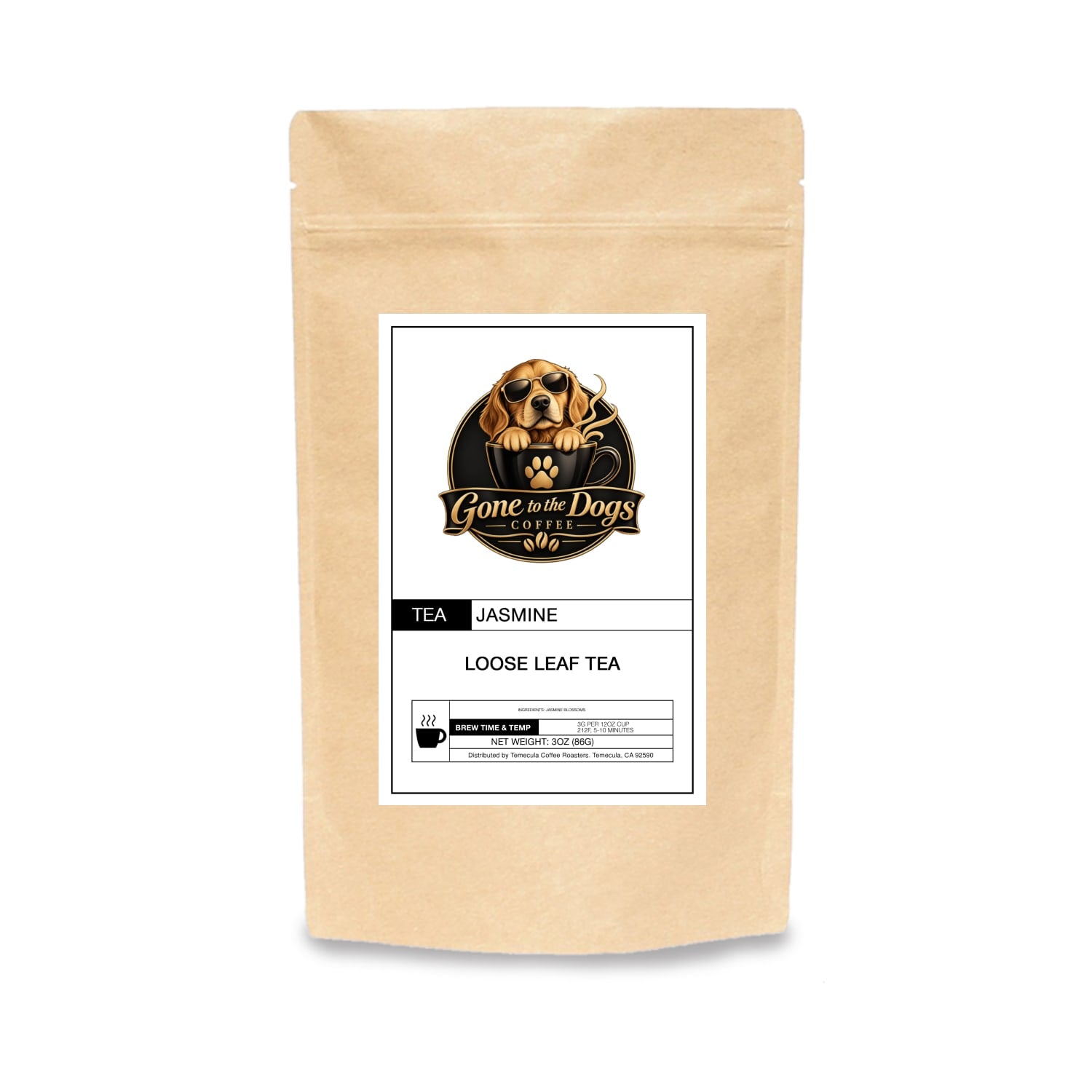
Ready to put these methods into practice? Our Jasmine is a hand-picked green tea paired with fragrant jasmine blossoms. It has a sweet, smooth character and is suitable for multiple steepings.
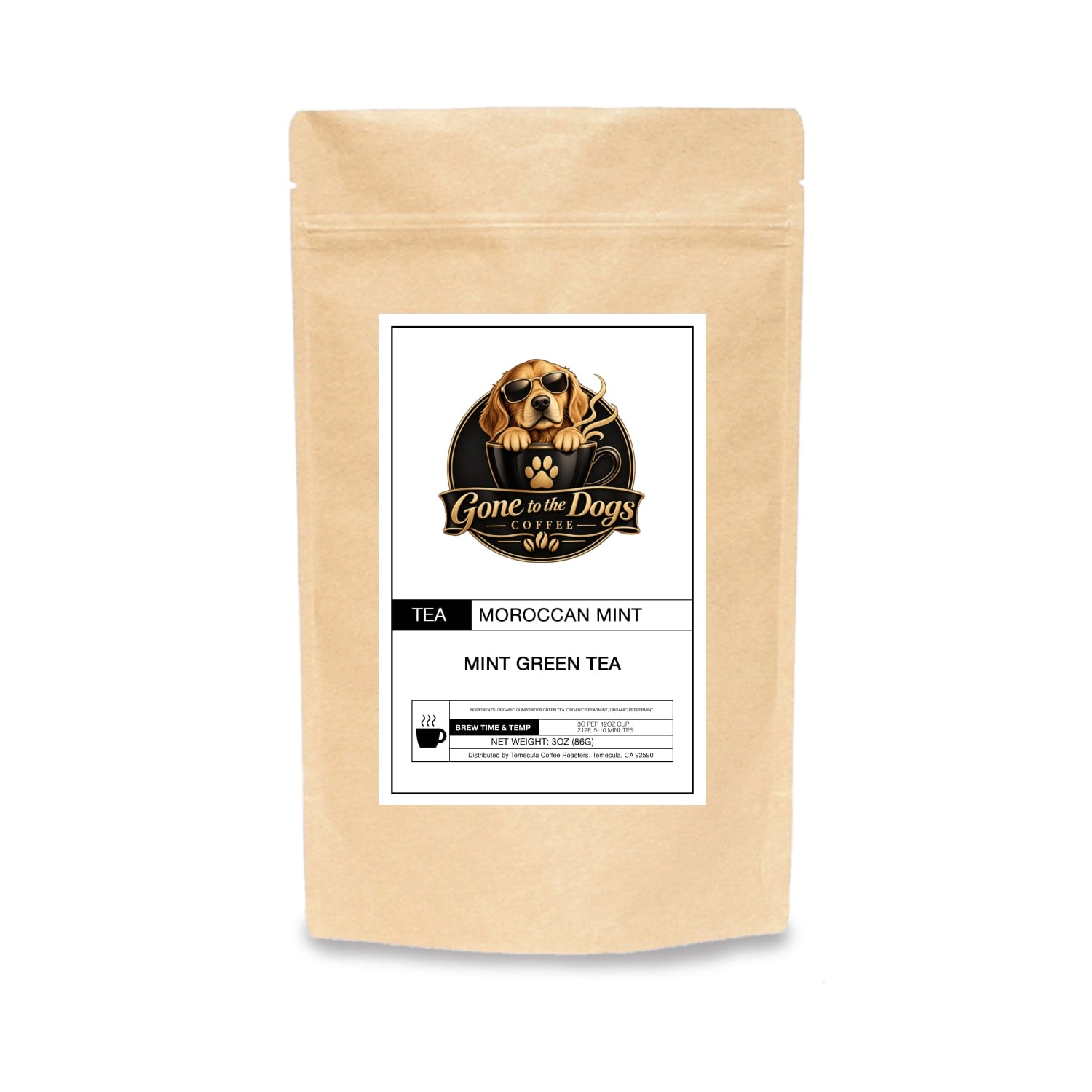
For a refreshing alternative, try Moroccan Mint, a blend of old green tea and fresh mint that can be enjoyed hot or iced.
Frequently Asked Questions
How do I brew tea so it is not bitter?
Use water just off the boil for black tea and cooler water, around 70-80°C, for green tea. Measure your leaves rather than guessing, and steep for the shortest time that gives good flavour. Adjust one variable at a time so you can see which change made the difference. Most bitterness comes from water that is too hot or steeping that runs too long, so start by lowering one of those two.
Why does my black tea taste bitter?
Black tea that tastes bitter is usually over-extracted, meaning too many tannins were released. Long steeping times, boiling water and too many leaves are the most common causes. Try steeping for three to four minutes instead of longer, and reduce the leaf quantity before you change anything else. Strong black tea does not have to be bitter if the extraction is controlled.
How do you make green tea taste good without sugar?
Lower the water temperature to around 70-80°C and keep steeping time to about two minutes. Avoid squeezing or over-steeping the leaves, since both release astringent compounds. Choosing a fresher, well-stored loose-leaf tea also helps, because stale leaves taste flatter and harsher. A blend such as Jasmine, with its fruity, floral notes, can be enjoyed without any sweetener.
Is bitter green tea bad for you?
Bitter green tea is not harmful in itself, but its taste is a sign of over-extraction, which can make the cup unpleasant enough that you stop drinking it. Brewing with cooler water and shorter steeps keeps the flavour smoother without changing the tea you chose. If you find you still dislike the taste, try a roasted option such as Hojicha, which has a mellow, toasty character.


