


Last Updated: November 2, 2026
Quick Summary
To buy small batch coffee online in 2026, choose sellers who print a roast date, state a short roast-to-ship window, and use a one-way degassing valve. "Small batch" alone is not proof of freshness, so check these details before you order.
- Look for a printed roast date, since a best-by date is only a shelf-life estimate.
- Coffee is generally most consistent for filter brewing several days after roasting.
- A one-way degassing valve and airtight packaging help limit oxygen and staling.
- Whole beans generally stay fresher longer than pre-ground coffee.
- Compare bags by cost per ounce, including shipping for your order size.
Table of Contents
- What Small-Batch Coffee Actually Means
- How to Check Freshness Before You Buy Small-Batch Beans
- Single Origin Options: Colombia, Ethiopia Natural, Tanzania, and Costa Rica
- Medium and Darker Roasts: Guatemala, Brazil Santos, Nicaragua, and Peru
- Sample Packs: Trying Several Small-Batch Coffees at Once
- Cost Per Cup: Comparing Bag Prices and Subscription Options
- Choosing Your First Small-Batch Bag from Gone to the Dogs
- Frequently Asked Questions
What Small-Batch Coffee Actually Means
If you want to buy small batch coffee beans online in 2026, the first thing to understand is what the label is actually promising about that small batch coffee. At Gone to the Dogs, we curate freshly roasted coffee and premium teas, and we think the phrase "small batch" deserves a clear definition before any purchase.
There is no single legal or industry-wide standard that defines how small a batch must be. That is why it pays to ask sellers how they roast, how often, and in what quantities.
Watch out: the phrase is used loosely in marketing. A bag can say "small batch" and still have been roasted weeks before it reached you, so treat the label as a starting point, not proof.
How to Check Freshness Before You Buy Small-Batch Beans
Freshness is the main reason people choose small-batch coffee, and it is the easiest thing to verify before you order, but only if you know what to look for. Most top-ranking pages tell you to "look for a roast date" and stop there. The useful version is a short verification routine you can run on any product page in about two minutes.
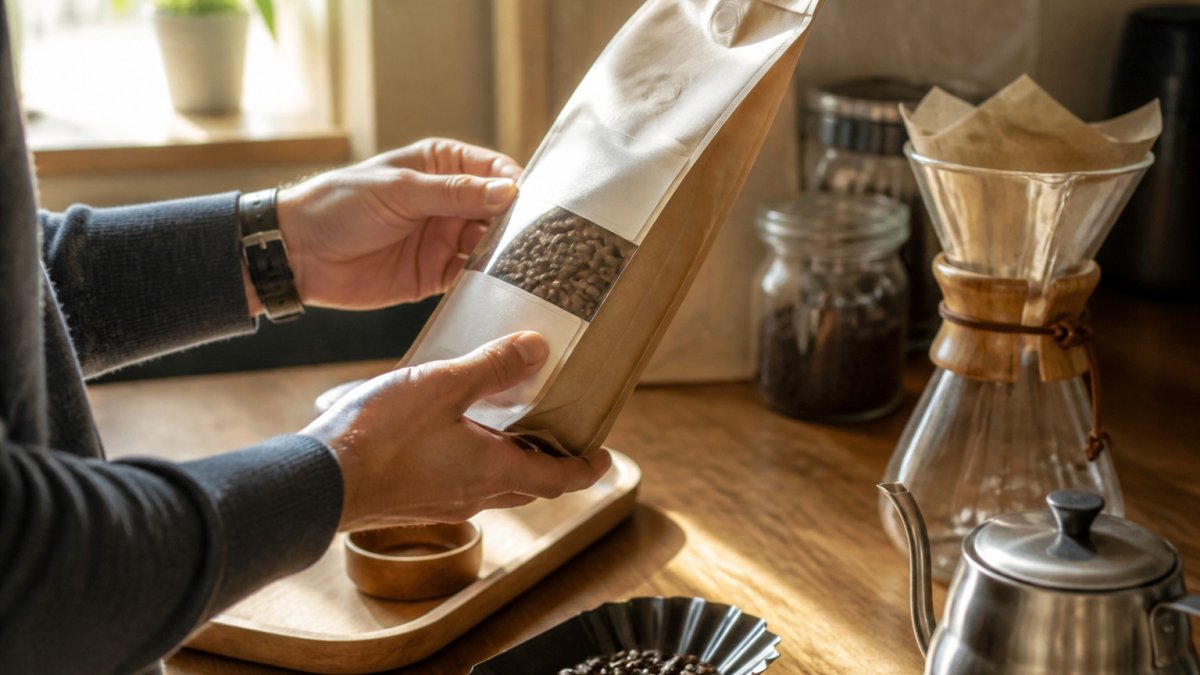
1. Find the roast date, not the best-by date
A printed roast date (for example, "Roasted 10/14/2026") is the single most useful signal on a coffee bag. A "best by" date is a shelf-life estimate, not a roast date, and it can be set months after roasting. If a product page shows only a best-by date or says "roasted fresh," treat that as a marketing claim rather than evidence. A common pattern among specialty roasters is to print the roast date on the bag label or bottom stamp; if the seller does not show it online, ask before ordering.
2. Understand the degassing window
Freshly roasted coffee releases carbon dioxide for several days after roasting. Coffee is generally considered at its most consistent for filter brewing some days after the roast date, and espresso often benefits from a bit more rest. This is why "roasted yesterday" is not automatically the best bag to brew today, it is the best bag to plan around. A roaster who ships within a few days of roasting gives you room to hit that window; one who ships weeks-old stock does not.
3. Check the packaging for a one-way valve
A one-way degassing valve lets carbon dioxide escape while limiting oxygen entry. It is a practical indicator that the roaster is packaging for freshness rather than just for shelf display. Combine it with an airtight seal and opaque or foil-lined material; light and oxygen are the two fastest ways to stale whole beans.
4. Confirm whole-bean availability and grind timing
Whole beans generally stay fresher longer than pre-ground coffee because less surface area is exposed to oxygen. If you do not own a grinder, you can grind in small batches at home before brewing. Grinding immediately before brewing preserves more aroma, which is the whole point of paying for small-batch coffee.
5. Estimate arrival freshness from shipping terms
Roast date plus shipping time equals the freshness you actually receive. Look for a stated roast-to-ship window and a delivery estimate. If a seller ships slowly, the roast date advantage can disappear in transit.
6. Store what arrives correctly
Once beans arrive, keep them in an airtight container away from heat, light, and moisture, and grind only what you need for each brew. Transferring beans to a clear countertop jar exposes them to light, which can stale them. Store the bag or container in a cupboard, not on top of the espresso machine.
If you want to compare this against how a specific roaster handles it, Specialty Coffee Association freshness guidance publishes general resources on coffee freshness and storage that are useful background for these checks.
Use this quick reference to run the same freshness checks on any product page before you order.
| Check | What to look for | Why it matters |
|---|---|---|
| Roast date | Printed roast date, not just best-by | Best-by is a shelf-life estimate |
| Degassing window | Several days after roasting | Coffee is more consistent after resting |
| Packaging | One-way degassing valve | Limits oxygen while releasing CO2 |
| Bean form | Whole beans available | Less exposed surface, stays fresher |
| Shipping | Stated roast-to-ship window | Transit time erodes roast advantage |
| Storage | Airtight, away from heat and light | Light and oxygen stale beans fastest |
Single Origin Options: Colombia, Ethiopia Natural, Tanzania, and Costa Rica
Single-origin coffees show where a bean was grown, which makes flavor differences easier to taste and compare. Our Colombia is a medium roast with dried orange, berry and chocolate notes, grown by smallholder farmers in Medellin at 1300-1500 meters. It is a good everyday choice for readers who want a balanced cup.
For a brighter profile, our Ethiopia Natural is a med-light roast from the Sidama Zone, with milk chocolate, fruit and caramel notes. Tanzania leans floral and delicate, with pear, jasmine and strawberry in the cup, while Costa Rica from Alajuela is medium roast with sweet apple, raisin and honey.
If you are deciding which single origin to start with, browse the full single origin range to compare roast levels. Readers weighing Colombian beans can also see the Colombia coffee and buy it directly.

Medium and Darker Roasts: Guatemala, Brazil Santos, Nicaragua, and Peru
Not every buyer wants a light, fruit-forward cup. Our Guatemala from Antigua is a medium roast with dark chocolate, bright fruit and butterscotch, fully washed and sun dried. Brazil Santos offers a smoother, cocoa-noted cup, while Nicaragua from Matagalpa balances cocoa, floral and citrus tones.
Peru is a medium roast with salted caramel, silky sweetness and citrus. It suits a slow morning or an everyday brew where you want a smooth finish. Explore the Peru coffee if you prefer a sweeter, rounder profile.

Sample Packs: Trying Several Small-Batch Coffees at Once
If you cannot decide between origins, a sample pack lets you compare several coffees without committing to full bags. Our Single Origin Favorites Sample Pack includes six 2oz packs covering Brazil Santos, Colombia, Costa Rica, Ethiopia, Honduras and Tanzania, ranging from medium-light to medium-dark roasts.
Our Best Sellers Sample Pack adds blends and single origins, including the dark-roasted 6Bean Blend and the medium-roasted Breakfast Blend. Try the Single Origin Favorites Sample Pack to find the profiles you enjoy most, one cup at a time.

Cost Per Cup: Comparing Bag Prices and Subscription Options
Comparing small-batch coffee on sticker price alone is misleading, because bag sizes, shipping thresholds, and subscription terms vary widely. The useful comparison is cost per ounce of roasted coffee, and then cost per cup once you account for how much you actually brew. Here is a practical framework you can apply to any seller, including us.
Step 1: Normalize to cost per ounce
Divide the bag price by the bag weight in ounces. For a sense of how this applies to wholesale and gourmet food retail buying, see the coffee for gourmet food retail article. Bag sizes and prices differ between sellers, so divide each bag's price by its weight in ounces before comparing. Same price, very different value. Always convert to ounces before comparing, because "a bag" means different things at different roasters.
Step 2: Convert ounces to brews
A common rule of thumb is about 0.36 oz (roughly 10 grams) of coffee per 6 oz cup for drip brewing, so a 12 oz bag yields roughly 33 cups at that strength. Espresso uses more coffee per shot, so the same bag yields fewer servings. Use your own dose if you know it; the point is to compare sellers on the same basis rather than on bag count.
Step 3: Add shipping and thresholds
Shipping can change the ranking entirely. A seller with a lower bag price but a shipping fee on small orders can cost more per ounce than one with a slightly higher bag price and free shipping above a stated threshold. Write down the shipping cost for the order size you would actually place, not the best-case free-shipping scenario.
Step 4: Read subscription terms before comparing
Subscriptions often lower the per-bag price but add commitment terms: minimum number of shipments, skip or cancel windows, and whether the discount applies to every order or only the first. Compare the recurring price, not the introductory price, and check whether you can pause without penalty. A subscription that saves 10% but locks you into six shipments may cost more than buying two bags when you need them.
Step 5: Factor in variety and waste
Sample packs and smaller bags cost more per ounce but reduce the risk of buying a full bag you do not enjoy. If you are still learning your preferences, the lower waste can offset the higher per-ounce price. Once you know what you like, larger bags and recurring orders usually win on cost per cup.
Choosing Your First Small-Batch Bag from Gone to the Dogs
For a first purchase, start with one single origin that matches your taste. If you like bright and fruity, try Ethiopia Natural or Tanzania. If you prefer chocolate and a smooth finish, Brazil Santos or Guatemala is a good place to start. If you are still undecided, the sample pack is the lowest-risk way to learn your preferences.
At Gone to the Dogs, we would start with a single bag, brew it a few times, and note what you like before buying more. Once you know your favorite origin, a larger bag or a regular order becomes an easy decision.
Frequently Asked Questions
Where can I buy small-batch coffee beans online?
Small-batch coffee beans are sold directly by independent roasters through their own websites, which is where most of the freshest stock is listed. Gone to the Dogs sells single-origin coffees such as Colombia, Ethiopia Natural, Tanzania, Costa Rica, Guatemala, Brazil Santos, Nicaragua and Peru, each at 24.99. Check the roast date on the product page before ordering, because a bag roasted recently will taste noticeably brighter than one that has been sitting in a warehouse.
What does small-batch coffee mean?
Small-batch coffee is roasted in limited quantities rather than in the large drum runs used for supermarket brands. Smaller batches let the roaster monitor each roast closely and sell beans while they are still fresh. The term describes how the beans are roasted, not a specific flavor or quality grade, so it helps to read the roast level and tasting notes on the bag to judge what you will actually drink.
How long do coffee beans stay fresh after roasting?
Whole beans are generally at their best for a few weeks after the roast date, although many people enjoy them for longer. Ground coffee loses flavor much faster because more surface area is exposed to air. Buy whole beans when you can, store them in an airtight container away from heat and light, and grind just before brewing. A visible roast date is a better guide to freshness than a best-before date.
Ready to find your next cup? Gone to the Dogs offers freshly roasted, carefully selected beans with origin details on every bag, so you can match the coffee to your taste. Start with a single bag or a sample pack and discover a new favorite.


