


Table of Contents
- What Makes Coffee Smooth and Flavorful
- Tasting Notes in Gourmet Coffee: Understanding Flavor Profiles
- Single-Origin vs. Blended Coffee for Retail Selection
- Best Coffee Gift Sets for Enthusiasts: Curating Retail Assortments
- How to Merchandise Luxury Coffee in Retail Environments
- Brewing Methods and Coffee Selection for Maximum Flavor
- Storage and Shelf-Life: Keeping Coffee Fresh for Retail
- Frequently Asked Questions
Last Updated: October 2, 2026
What Makes Coffee Smooth and Flavorful
Smooth flavorful coffee balances three factors: roast level, body, and acidity. Gone to the Dogs curates blends and single-origins that prioritize this balance, ensuring every cup delivers the complexity your customers expect.
Smoothness is the absence of harsh, astringent notes. A smooth cup has a clean finish, balanced acidity, and pleasant mouthfeel. Medium roasts excel here, preserving origin characteristics while avoiding over-extraction and burnt undertones.
Roast level and its impact on smoothness
Medium roast is the sweet spot for achieving smoothness without sacrificing flavor complexity. Light roasts preserve origin characteristics but carry sharp acidity; dark roasts develop heavier body but mask origin under roasted notes.
Medium roasts balance these extremes, developing substantial body while maintaining origin tasting notes. A medium roast Colombia shows dried orange and chocolate; a dark roast of the same bean tastes primarily of roast.
Gone to the Dogs sources medium roasts.
Body, acidity, and mouthfeel in gourmet blends
Body is how coffee feels in your mouth, weight and texture. Mouthfeel is the tactile sensation (smooth, silky, grainy, or astringent). Acidity is the brightness or tartness, the lively, fruity notes that make coffee complex.
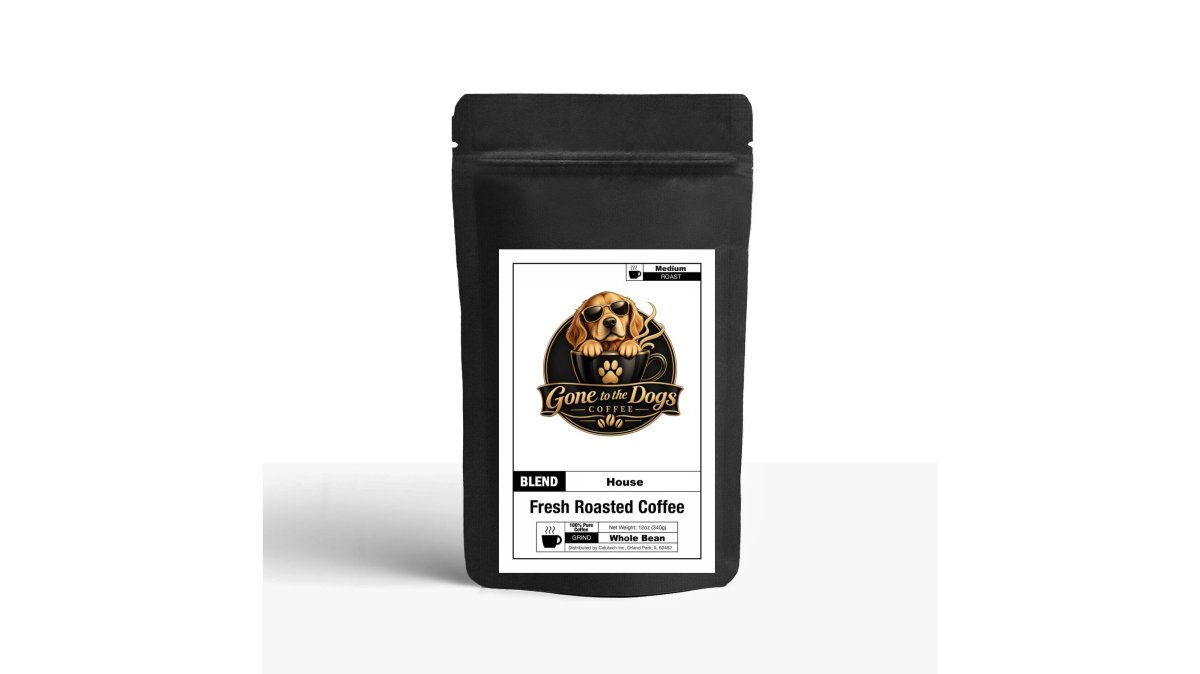
The House Blend from Gone to the Dogs combines Central and South American coffees for medium body with balanced acidity, delivering nutty, sweet chocolate, and mild citrus without sharp edges.

Light body tastes thin; high acidity becomes sour; heavy body becomes muddy. The goal is harmony: each element supporting the others.
Tasting Notes in Gourmet Coffee: Understanding Flavor Profiles
Tasting notes describe inherent flavors (chocolate, citrus, caramel, berries, nuts) based on origin, altitude, processing method, and roast level. Understanding them helps customers choose coffees they'll enjoy and deepens their appreciation.
How origin and altitude shape tasting notes
Coffee grown in different regions develops distinct profiles based on climate, soil, and altitude. High-altitude coffees develop more acidity and complexity; lower altitudes produce fuller body and earthier notes.
Colombia (1,300-1,500m, volcanic loam) shows dried orange, berry, and chocolate. Peru (1,100-1,700m, clay minerals) develops salted caramel and citrus brightness. Brazil Santos (750-1,050m) produces smooth cups with cocoa notes and fuller body.

Processing method shapes flavor. Fully washed coffees develop brighter, cleaner flavors; pulped natural coffees develop fruitier, more complex notes. Gone to the Dogs sources both.
Identifying chocolate, citrus, and caramel undertones
Chocolate notes emerge from roasting and the bean's natural compounds. Medium roasts develop cocoa and dark chocolate undertones without burnt character. Brazil Santos exemplifies this natural integration.
Citrus notes come from origin and acidity. Colombia's dried orange is bright and clean; Peru's citrus is subtle, balanced against salted caramel sweetness.
Caramel notes indicate sweetness and body, common in coffees with lower acidity and fuller mouthfeel. Peru's salted caramel combines sweetness with subtle mineral quality from clay mineral soil.
Single-Origin vs. Blended Coffee for Retail Selection
Single-origin coffees highlight one region's unique characteristics. Blended coffees combine beans from different origins to achieve consistency, balance, or specific flavor goals. Each approach serves different customers.
Single-origin options: Colombia, Peru, and Brazil Santos
Single-origins let customers taste terroir. Colombia offers bright, fruity complexity; Peru delivers smooth sweetness with citrus; Brazil Santos provides elegant cocoa notes and full body.
Single-origins appeal to enthusiasts. Citrus lovers gravitate toward Colombia; smoothness seekers prefer Brazil Santos.
Gone to the Dogs sources from specific growers: Fazenda Santa Barbara (Brazil), smallholder farmers (Colombia), and Cooperativa Agricola (Peru).
House blends: Consistency and versatility
House blends combine single-origins for consistency and balance. The House Blend blends Central and South American coffees to deliver a clean, bright finish with balanced acidity.
Blends balance competing goals, combining high-altitude bright coffee with lower-altitude fuller-bodied coffee to achieve smoothness without harshness.
For retail, blends offer reliability. The Breakfast Blend and Medium Blend deliver consistent, approachable smooth flavorful coffee for customers seeking quality without single-origin complexity.
Best Coffee Gift Sets for Enthusiasts: Curating Retail Assortments
Coffee gift sets drive retail revenue and introduce new customers to gourmet options. The best sets balance variety, quality, and presentation. A curated assortment tells a story and invites exploration.
Pairing complementary flavors for gift appeal
Gift sets should offer contrast. Pair a smooth blend with a complex single-origin, such as citrus-forward Colombia with cocoa-rich Brazil Santos, to encourage tasting across styles.

Beginners appreciate a blend and single-origin with clear tasting notes. Enthusiasts want variety: Peru's salted caramel, Colombia's dried orange, and Brazil Santos's cocoa notes in one set.
Include tasting notes cards describing origin, altitude, and flavor profile. Context transforms a purchase into an experience.
Flavored varieties and their gourmet applications
Flavored coffees expand appeal. Mexican Chocolate pairs with after-dinner moments; French Vanilla offers creamy smoothness for milk-based drinks; Hazelnut blends seamlessly without overpowering quality.
Gone to the Dogs's flavored coffees start as specialty-grade single-origins roasted to smooth medium, then flavored with natural oils while warm. The Mexican Chocolate works as an after-dinner cordial or paired with Tequila or Kahlua.
Flavored varieties add versatility to gift sets, appealing to customers transitioning into specialty coffee or those seeking variety.
How to Merchandise Luxury Coffee in Retail Environments
Merchandising communicates quality and builds trust. The way coffee is displayed, labeled, and positioned shapes how customers perceive value and freshness.
Freshness indicators and roast dates
Roast date is an important freshness signal. Displaying it prominently signals freshness and careful management.
Gone to the Dogs includes roast dates on every bag, signaling confidence in quality and helping customers distinguish fresh coffee from aged stock.
Transparency in sourcing and sustainability certifications
Display origin information, region, altitude, grower name, and processing method. This builds confidence and justifies premium pricing.
Brewing Methods and Coffee Selection for Maximum Flavor
Different brewing methods extract different flavor profiles from the same coffee. Understanding these relationships helps customers select the right coffee for their preferred brewing method.
Cold-brew recommendations and extraction timing
Cold brew is a distinct brewing method that produces smoother, less acidic coffee than hot brewing. The extended steeping time (12-24 hours) extracts flavor compounds gradually without the harsh extraction that can occur with hot water and short contact times.
Water chemistry and its role in flavor extraction
Water quality dramatically affects coffee flavor. Hard water can over-extract, creating harsh notes; soft water under-extracts, producing thin, sour coffee.
Storage and Shelf-Life: Keeping Coffee Fresh for Retail
Coffee's shelf life depends on storage conditions.
| Coffee Type | Best For | Tasting Notes | Roast Level |
|---|---|---|---|
| House Blend | Everyday smoothness | Nutty, chocolate, citrus | Medium |
| Colombia | Citrus lovers | Dried orange, berry, chocolate | Medium |
| Peru | Smooth seekers | Salted caramel, silky sweet, citrus | Medium |
| Brazil Santos | Cocoa enthusiasts | Elegant, smooth, cocoa | Medium |
| Cold Brew Blend | Extended steeping | Chocolate, toffee, floral | Medium |
| Mexican Chocolate | Dessert pairing | Chocolate, cinnamon, vanilla | Medium |
According to Specialty Coffee Association cupping standards, proper tasting methodology involves evaluating aroma, flavor, aftertaste, acidity, body, and balance, the same criteria that define smooth, flavorful coffee in retail settings. Understanding these dimensions helps both retailers and customers make informed selections.
Frequently Asked Questions
What defines a smooth coffee profile in gourmet retail?
A smooth, flavorful coffee balances low bitterness with clean acidity and a pleasant mouthfeel. Medium roasts achieve this by preserving origin characteristics while developing balanced flavor notes. Smooth coffees typically feature chocolatey undertones, mild acidity, and a clean finish, qualities that appeal to both daily drinkers and gourmet enthusiasts. Single-origin coffees from regions like Brazil and Peru naturally deliver this smoothness when roasted to medium levels.
How do tasting notes in gourmet coffee help retailers and customers make better choices?
Tasting notes describe specific flavor characteristics like citrus, chocolate, caramel, or berries, guiding customers toward coffees that match their preferences. These notes reflect the coffee's origin, altitude, and processing method. For retail merchandising, highlighting tasting notes on packaging, such as the citrus and chocolate notes in Colombia or the salted caramel profile in Peru, helps customers understand what they're buying before brewing, building confidence in premium pricing.
What should retailers look for when selecting between single-origin and blended coffee?
Single-origin coffees showcase distinct regional flavor profiles and appeal to enthusiasts seeking complexity and traceability. Blends offer consistency and versatility, making them ideal for customers who want a reliable smooth cup daily. For gourmet retail, single-origin options attract gift-givers and explorers, while blends serve everyday drinkers. Offering both allows you to serve multiple customer segments and price points, all at the same $24.99 price point.
How does freshness impact the flavor of gourmet coffee in retail?
Fresh coffee retains its intended flavor profile, aroma, and acidity. Display roast dates prominently on packaging to signal freshness and quality. Proper storage in sealed, opaque bags away from heat and light preserves the coffee's balanced flavor and prevents staleness.
Why is sustainability and ethical sourcing important when merchandising luxury coffee?
Gourmet coffee consumers aged 25-45 increasingly value transparency about where their coffee comes from and how growers are treated. Highlighting certifications, grower names, and processing methods, like the pulped natural drying in Brazil Santos or the smallholder farmer cooperatives in Colombia, builds trust and justifies premium pricing. Ethical sourcing also appeals to gift-givers seeking products that reflect their values, making it a key merchandising angle for retail assortments.


