


Quick Summary
The best morning energy tea depends on how strong a lift you want, with English Breakfast offering steady black tea alertness and Hojicha a gentler start. Matcha delivers about 60 to 80 mg of caffeine per serving because you drink the whole leaf, so brewing strength controls your energy.
- English Breakfast is a strong black tea that holds up to milk and sugar for steady focus.
- Black tea typically contains 40 to 70 mg of caffeine per 8 oz cup.
- Green tea delivers roughly 20 to 45 mg per 8 oz when brewed at 160 to 180°F.
- Matcha uses the whole leaf, so a standard serving delivers about 60 to 80 mg of caffeine.
- For a gentler cup, use less leaf, steep shorter, or choose hojicha or white tea.
Table of Contents
- How Tea Gives You Natural Energy
- Caffeine Amounts by Tea Type and Brewing Method
- Best Tea for Energy and Focus
- Best Tea for Energy Without Caffeine
- Best Tea to Drink in the Morning on an Empty Stomach
- Brewing a Reliable Morning Cup
- Who Should Limit Caffeine and Choose Differently
- Choosing Your Morning Tea From the Gone to the Dogs Collection
- Frequently Asked Questions
Last Updated: November 5, 2026
A morning tea can be a gentle lift rather than a jolt, but only if you know which leaves to reach for and how strong to brew them, since a good morning energy tea steadies you without the crash. Many people reach for coffee by default, when a well-chosen tea from Gone to the Dogs can give steady alertness with less of the mid-morning crash. This guide from Gone to the Dogs walks through the teas that suit a morning routine, how much caffeine each one carries, and how to brew a dependable cup.
Quick Picks:
- Best for steady focus: English Breakfast, a strong black tea that holds up to milk and sugar
- Best for a gentler start: Hojicha, a roasted green tea with lower perceived intensity
- Best for a calm, mindful ritual: Matcha, prepared traditionally for a considered pause
How Tea Gives You Natural Energy
Tea provides energy mainly through caffeine, a stimulant that tea leaves contain naturally. Caffeine is the compound most responsible for the alertness people feel after a morning cup. Black and green teas both contain it, though in different amounts depending on the leaf, the processing and how long it steeps.
The sensation is different from coffee. Tea also contains L-theanine, an amino acid that many people associate with a smoother, less jittery focus.
Caffeine Amounts by Tea Type and Brewing Method
Caffeine content in tea is not fixed, it varies with tea type, leaf amount, water temperature, and steep time. Understanding these variables lets you control the strength of your morning cup rather than guessing. Below are approximate ranges based on common preparation methods.
Black tea typically contains 40-70 mg of caffeine per 8 oz cup when brewed with 2-3 g of leaf for 3-5 minutes at 195-212°F. A longer steep (5-10 minutes) or a larger leaf quantity (3-4 g) can push caffeine toward 80-100 mg. English Breakfast and Earl Grey are black teas that fall in this range.
Green tea generally delivers 20-45 mg per 8 oz when brewed at 160-180°F for 2-3 minutes with 2 g of leaf. Steeping green tea with boiling water or for longer than 4 minutes not only increases caffeine but also draws out bitter tannins. Hojicha, a roasted green tea, tends to be lower in caffeine than many other green teas.
Matcha is different: you consume the entire powdered leaf, so a standard 1-2 g serving (whisked into 2-4 oz water) delivers about 60-80 mg of caffeine, comparable to a strong black tea or a small espresso. Because matcha is not steeped and discarded, the caffeine is fully ingested. Read about the different matcha grades and their health aspects to see how grade relates to what you drink.
Oolong sits between green and black, with roughly 30-50 mg per 8 oz depending on oxidation and steep time. White tea is lower, around 15-30 mg per cup. Yerba mate, though not a true tea, brews to about 65-85 mg per 8 oz when prepared traditionally with 2-3 g of leaf.
Brewing method matters as much as tea type. A short steep of 2 minutes extracts roughly half the caffeine of a 5-minute steep. Using more leaf increases caffeine proportionally. Water temperature affects extraction speed: cooler water (160-170°F) slows caffeine release, while boiling water extracts it quickly. For a gentler morning cup, use less leaf, a shorter steep, or cooler water, or choose a naturally lower-caffeine tea like hojicha or white tea.
Watch out: If you switch from black tea to matcha assuming it is milder, you may actually increase your caffeine intake because matcha uses the whole leaf. Adjust serving size accordingly.
For precise control, measure your leaf with a small scale (2-3 g per 8 oz is a common starting point) and time your steep. Most tea retailers, including Gone to the Dogs, provide brewing guidance on each product page, use that as your baseline, then tweak one variable at a time.
The table below summarises the approximate caffeine ranges the article gives for each tea type, so you can compare them at a glance.
| Tea type | Caffeine per 8 oz cup | Note |
|---|---|---|
| Black tea | 40-70 mg | 3-5 min steep at 195-212°F |
| Green tea | 20-45 mg | 2-3 min steep at 160-180°F |
| Matcha | 60-80 mg | Whole leaf is consumed |
| Oolong | 30-50 mg | Varies with oxidation and steep time |
| White tea | 15-30 mg | Among the lowest options |
| Yerba mate | 65-85 mg | Traditional preparation |
Best Tea for Energy and Focus
For a morning that needs real focus, a strong black tea is a direct option, and English Breakfast is a familiar choice for that purpose. English Breakfast is a blend of African and Indian tea with enough body to stand up to milk and sugar, which makes it a familiar, comforting start to the day.

For a spiced, more invigorating cup, Masala Chai offers a bold, aromatic flavour. If you want focus with a calmer character, Matcha is prepared traditionally and sipped as a deliberate ritual. Each suits a different kind of morning, so pick the one that matches how you like to start.


Best Tea for Energy Without Caffeine
Some readers want a warm morning drink without caffeine at all. Herbal infusions fill that role, since they are made from plants rather than tea leaves. Choosing a caffeine-free option is a reasonable decision for evenings or for anyone sensitive to stimulants, though it will not give the same alertness as a caffeinated tea.
Read labels carefully. Blends sold as "tea" are not always caffeine-free, and the ingredient list is the reliable guide.
Herbal Tea for Energy Boost
Herbal tea is warm, aromatic and can be part of a deliberate routine. Use it when you want a comforting, caffeine-free cup.
Best Tea to Drink in the Morning on an Empty Stomach
Strong black teas can be harsh for some people when taken before food. If that describes you, Hojicha is a roasted green tea with a mellow, toasted character and a gentler profile.
Pair any tea with a small breakfast if you notice discomfort, and listen to your own body over any general rule.
Brewing a Reliable Morning Cup
Consistency matters more than strength. Measure your leaf rather than guessing, and follow the steeping time on the label. Earl Grey is brewed for 5 to 10 minutes at 195°F using about 2.5 g per 12 oz.
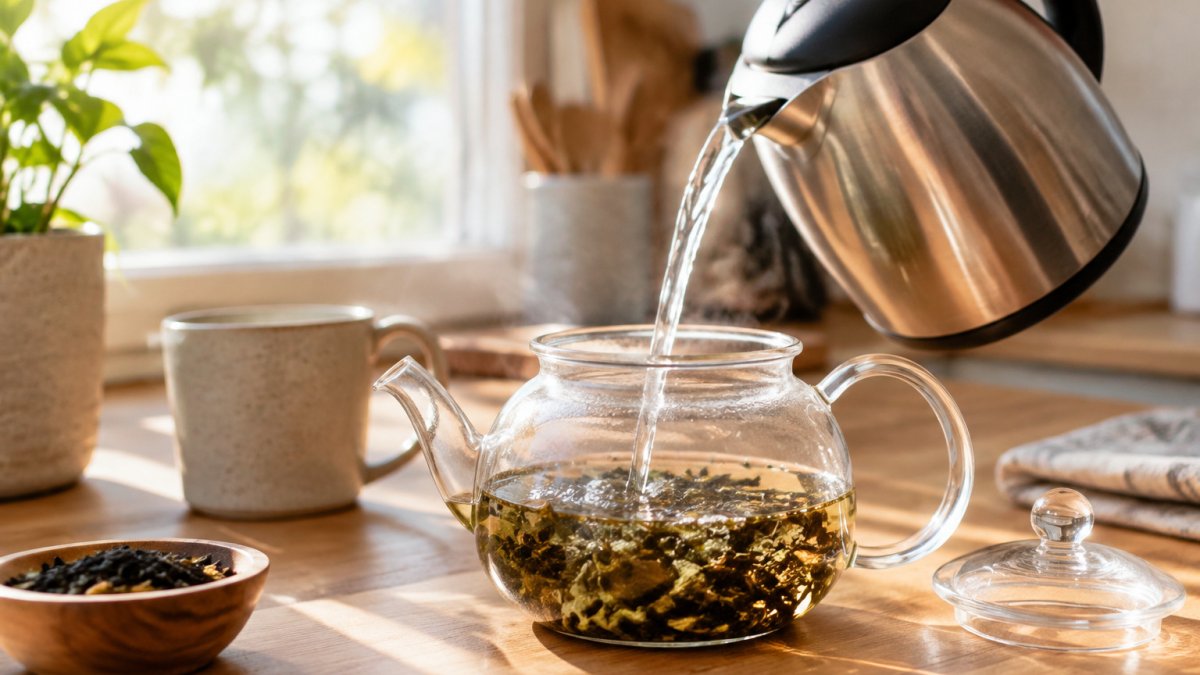
Green teas and matcha prefer cooler water and shorter steeps, so brewing them the same way as black tea often produces a harsh taste. Keep a simple note of what you used and how long you steeped it. That makes it easy to repeat a cup you enjoyed.
Who Should Limit Caffeine and Choose Differently
Caffeine affects people differently, and a morning tea that works well for one person may cause jitters, upset stomach, or sleep disruption for another. This section outlines who should be cautious and how to adjust your choice, a practical angle most tea listicles skip.
Pregnancy and breastfeeding: Health organizations generally advise limiting caffeine during pregnancy. A single 8 oz cup of black tea (40-70 mg) fits within that limit, but multiple cups or a matcha serving can add up quickly. Herbal teas are not automatically safe, some herbs are contraindicated in pregnancy, so check with a clinician before switching.
Medications and health conditions: If you take prescription medication or have a health condition, ask your pharmacist or clinician whether caffeine moderation is advised.
Caffeine sensitivity: Some people metabolize caffeine slowly due to genetics or liver function. If you feel shaky, irritable, or sleepless after a single cup, you are likely sensitive. Start with a lower-caffeine tea (white tea, hojicha, or a short-steeped green tea) and keep your morning serving small. Avoid drinking caffeinated tea after midday if sleep is a concern, caffeine’s half-life is about 3-5 hours, meaning a 2 p.m. cup can still affect you at bedtime.
Empty-stomach sensitivity: As noted earlier, strong black tea can irritate the stomach lining. If you experience discomfort, choose a gentler tea or eat a small breakfast first. Herbal infusions (caffeine-free) are an option when you want a warm drink without the stimulant.
Children and adolescents: If you are considering tea for children or teens, check with a pediatric clinician first.
If you are unsure where you fall, start with a lower-caffeine option like hojicha, brew it weak (less leaf, shorter steep), and observe how you feel. Gradually adjust strength or switch tea types based on your response. When in doubt, consult a healthcare provider, this guide is not medical advice.
Choosing Your Morning Tea From the Gone to the Dogs Collection
The right morning tea depends on what you need. For a dependable, familiar cup, English Breakfast is the straightforward choice. For a spiced lift, Masala Chai adds intensity. For a ritual pause, Matcha rewards slow preparation, and for an easier start, Hojicha is gentler on an empty stomach.
Each of these is priced at $22.99 in our collection. Start with the one that matches your mornings, brew it carefully, and adjust the strength until it feels right.
Frequently Asked Questions
What is the best tea for morning energy?
For most people wanting natural energy in the morning, black tea and matcha are the strongest starting points because both contain caffeine. Gone to the Dogs' Breakfast-style black tea blends, such as English Breakfast, give a full-bodied cup that holds up to milk and sugar. Matcha, which Gone to the Dogs sells for traditional preparation, is a considered ritual tea. If you are sensitive to caffeine, start with a smaller cup and build up gradually.
Can tea provide energy without caffeine?
Caffeine-free herbal teas do not give the same stimulating lift as black or green tea, so they are better for calm alertness than a wake-up effect. Research on herbal teas and energy is limited, so claims of a natural energy boost should be treated cautiously. If you want a caffeine-free option, choose a warming blend you enjoy and pair it with breakfast, water and regular sleep, which affect energy far more than any single drink.
Is it okay to drink tea on an empty stomach?
Many people drink tea first thing without problems, but caffeine and tannins can irritate a sensitive stomach or cause nausea in some people. If you notice discomfort, have a small snack such as toast or fruit before your first cup.
Which tea gives more energy, green tea or black tea?
Black tea generally contains more caffeine per cup than green tea, which is why it is often chosen for morning alertness. Green tea offers a lighter lift with a smoother feel, and matcha, which is consumed as a whole powder, can deliver more caffeine per serving than a standard steeped green tea. Gone to the Dogs' Masala Chai and English Breakfast are bold, full-bodied options, while Jasmine and Moroccan Mint are lighter green tea blends.
Gone to the Dogs offers a curated selection of premium teas designed to fit into everyday routines. Browse the collection and find the cup that suits your morning.


