


Table of Contents
- Quick Comparison: Best Coffee Brewing Methods for Beginners
- Coffee Brewing Ratios for Beginners: Getting the Basics Right
- Pour-Over and AeroPress: Manual Brewing Methods Worth Learning
- French Press, Moka Pot and Cold Brew: Immersion and Pressure Methods
- Best Coffee Grind Size for Different Brewing Methods
- Essential Coffee Brewing Tools for Beginners
- Auto-Drip Machines and Coffee Pods: Convenience Without Compromise
- Budget, Space and Sustainability: What Most Guides Skip
- Frequently Asked Questions
Last Updated: September 27, 2026
Quick Comparison: Best Coffee Brewing Methods for Beginners
The best coffee brewing methods for beginners are pour-over, French press, AeroPress, moka pot, cold brew, and auto-drip. Each trades speed, effort, and cost differently. This guide from Gone to the Dogs breaks down all six, plus ratios, grind sizes, and tools worth buying.
Brewing coffee extracts flavor, oils, and caffeine from ground beans using water, time, and sometimes pressure. Get the balance right and you get a clean, sweet cup; get it wrong and you get bitterness or sourness.
Here's what most guides skip: the "best" method barely matters if your grind is wrong.
| Method | Time | Effort | Best For |
|---|---|---|---|
| Pour-over | 3-4 min | Medium | Clean, bright flavor |
| French press | 4-5 min | Low | Full-bodied, rich cups |
| AeroPress | 2-3 min | Low | Versatility, travel |
| Moka pot | 5-6 min | Medium | Strong, espresso-style |
| Cold brew | 12-18 hrs | Very low | Smooth, low-acid coffee |
| Auto-drip | 5-10 min | Very low | Busy mornings, batches |
Below, we'll show you exactly how each method works and which one fits your routine.
Coffee Brewing Ratios for Beginners: Getting the Basics Right
The golden ratio for most brewing methods is 1:15 to 1:18 by weight. Start at 1:16 and adjust: too strong, add water; too weak, add coffee.
Weigh your coffee. A scale costs little and fixes more bad cups than any upgrade, and grams beat scoops every time.
A few ratio rules to remember:
- Pour-over and drip: 1:16, or about 60g coffee per litre of water
- French press: 1:15 for a richer body
- AeroPress: 1:12 to 1:15, depending on strength
- Cold brew: 1:5 for concentrate, then dilute to taste
Water temperature matters just as much. Aim for 90-96°C; boiling water scorches coffee and pulls out bitterness. Without a thermometer, let the kettle rest 30 seconds after boiling.
Pour-Over and AeroPress: Manual Brewing Methods Worth Learning
Manual brewing gives you full control over water temperature, pour speed, and contact time, which is why so many beginners fall for it.
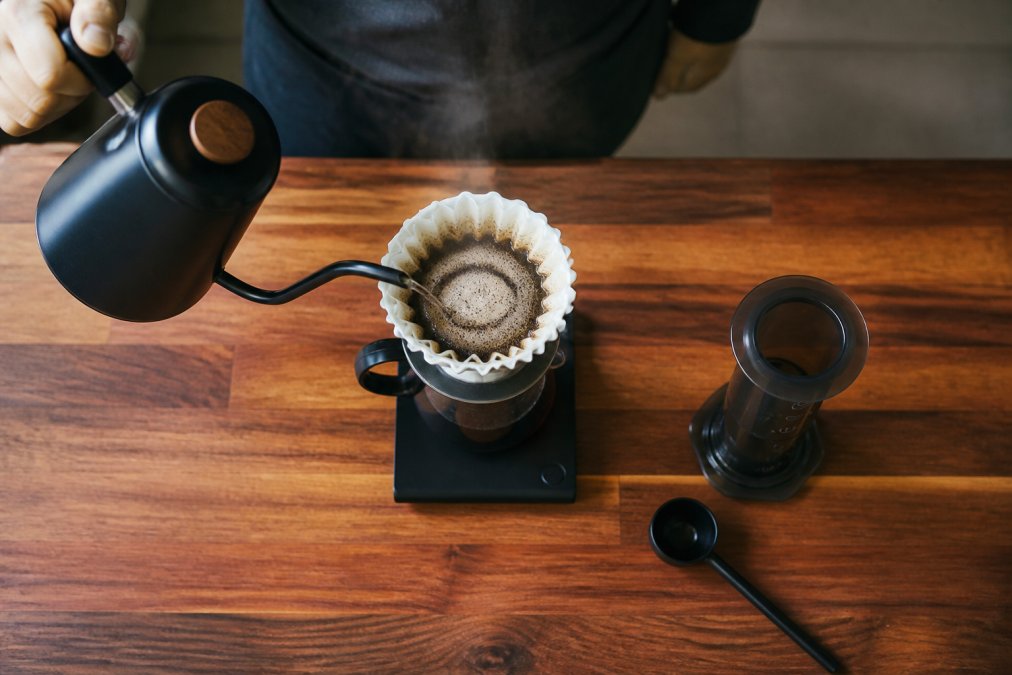
Pour-Over: Control and Clarity in Every Cup
Pour-over makes the cleanest cup of the six. Water passes through a paper filter, leaving oils and sediment behind, so flavors come through sharp and distinct.
You bloom the grounds with a small pour, wait 30 seconds, then pour in slow circles. Total brew time runs 3-4 minutes.
What most guides miss: the bloom phase isn't optional. Fresh coffee releases carbon dioxide, and skipping the bloom causes uneven extraction.
Pros: clean cup, full flavor control, cheap equipment Cons: demands attention, one cup at a time, paper filters add waste
AeroPress: Versatility That Fits Any Routine
The AeroPress brews in 2-3 minutes and cleans up in seconds, making either a clean, filter-style cup or a concentrated shot by changing steep time and pressure.
It's the best pick for small kitchens and travel. It packs flat, needs no power, and survives a suitcase.
Pros: fast, portable, forgiving, easy cleanup Cons: small batches, plastic body, technique still matters
French Press, Moka Pot and Cold Brew: Immersion and Pressure Methods
Immersion and pressure methods cover two extremes. French press and cold brew steep grounds in water. The moka pot forces steam through the bed instead.
French Press: Full-Bodied Coffee With Minimal Equipment
French press is the simplest path to a rich, full-bodied cup. Coarse grounds steep in hot water for four minutes, then you press the metal mesh filter down.
The mesh lets oils through, so the body feels heavier than pour-over, but it also leaves fine sediment in the cup. Some love it; others don't.
Use a coarse grind. Fine grounds slip past the filter and turn the cup muddy.
Pros: low cost, no paper filters, bold flavor Cons: sediment in cup, needs coarse grind, drink it fresh
Moka Pot and Cold Brew: Two Ends of the Temperature Spectrum
The moka pot brews with steam pressure on a stovetop, producing a strong, espresso-style drink in about 5 minutes. Use a fine grind, fill the basket level, and never tamp it down.
Cold brew sits at the opposite end: coarse grounds steep in cold water for 12-18 hours. The result is smooth and low in acidity, suits sensitive stomachs, and keeps in the fridge for days.
Pros: moka pot is fast and strong; cold brew is smooth and make-ahead Cons: moka pot can scorch; cold brew takes planning
Best Coffee Grind Size for Different Brewing Methods
Grind size is the single biggest lever on flavor. The best coffee grind size for different brewing methods runs from fine for moka pot to coarse for cold brew. Match grind to method and most bitterness problems disappear.
Here's the short version:
- Fine: moka pot, espresso-style brews
- Medium-fine: AeroPress
- Medium: auto-drip, pour-over
- Coarse: French press, cold brew
Two things cause most bad cups. Over-extraction, water pulls too long or the grind is too fine, tastes bitter and dry. Under-extraction, grind too coarse or brew too short, tastes sour and thin.
A burr grinder crushes beans evenly between two surfaces. A blade grinder chops them into uneven chunks.
Essential Coffee Brewing Tools for Beginners
You need four things to start: a scale, a burr grinder, a kettle, and a brewer. Everything else is optional. These essential coffee brewing tools for beginners cost far less than a year of café drinks.
Starter Kits by Budget
Under $50: French press, hand grinder, kitchen scale. This kit makes rich, full-bodied coffee and teaches you ratio and grind without any electronics.
Maintenance and Cleanup
Cleanup decides whether a method sticks. French press grounds go in the compost and the mesh filter rinses in seconds. AeroPress pushes out a puck and wipes clean. Pour-over means tossing a paper filter and rinsing the dripper. Moka pot needs disassembly and drying to avoid mineral buildup. Auto-drip machines need monthly descaling. Pods are easiest: eject and toss.
Auto-Drip Machines and Coffee Pods: Convenience Without Compromise
Auto-drip machines win on convenience: load the basket, add water, press start, walk away. But the gap between a $30 drugstore model and a $150 SCAA-certified brewer is enormous. Cheap ones often brew below the ideal 90-96°C range, giving under-extracted, sour coffee no matter how good your beans are. Look for a showerhead sprayer (not a single central spout), a thermal carafe if you hate burnt coffee, and pause-and-serve for mid-brew pours.
The Lifestyle Filter: Budget, Space, and Waste
Three things decide which method actually sticks: what you'll spend, what fits on your counter, and what you throw away.
Budget, Space and Sustainability: What Most Guides Skip
Three things decide which method actually sticks: what you'll spend, what fits on your counter, and what you throw away.
Frequently Asked Questions
What are the four best coffee brewing methods for beginners?
The four most beginner-friendly coffee brewing methods are pour-over, French press, AeroPress and auto-drip. Pour-over gives you control over extraction and a clean cup. French press is the simplest immersion method with minimal equipment. AeroPress offers speed and versatility. Auto-drip delivers consistency with the least effort. Each method suits a different routine, so pick the one that matches your time, space and taste preferences.
What is the 15-15-15 rule for coffee?
The 15-15-15 rule is a simple guideline for pour-over brewing: 15 grams of coffee, 15 times that weight in water (225 grams), and a 15-second bloom phase before the main pour. It removes guesswork from coffee brewing ratios for beginners and produces a balanced cup. Adjust the coffee-to-water ratio slightly to taste, but start here before experimenting with grind size or water temperature.
Which coffee brewing method is easiest for beginners?
French press is widely considered the easiest coffee brewing method for beginners. You add coarse grind coffee, pour hot water, wait four minutes, then press and serve. There is no filter to manage, no precise pouring technique and very little that can go wrong. Auto-drip machines are equally simple but offer less control over flavor. If you want to learn technique, start with French press and move to pour-over once you are comfortable.
What grind size should beginners use for each brewing method?
Grind size matters more than most beginners expect. Use coarse grind for French press and cold brew, medium-fine for pour-over and AeroPress, and fine grind for Moka pot. Auto-drip machines typically take a medium grind. A burr grinder gives you consistent grind consistency, which directly affects extraction yield and flavor. Blade grinders produce uneven particles that lead to both over-extraction and under-extraction in the same cup.
Choosing a brewing method is really choosing a morning routine, and the wrong fit will sit unused on your counter within a month. Gone to the Dogs makes that choice easier with freshly roasted coffee, carefully selected beans, and convenient pods, all crafted with purpose and care so every cup is worth savoring. Start with one method, one good grinder, and beans you actually enjoy. Get started with Gone to the Dogs and make your mornings taste better.


